gmwade8
Joined: 30 Dec 2025
Replies: 5
Location: USABack to top |
 Posted: Mon Jan 05, 2026 8:17 pm
Post subject:
Posted: Mon Jan 05, 2026 8:17 pm
Post subject:
Dziękuję. The handwriting is a bit challenging. I am working through the genealogy documents that I obtained a couple of months ago from a priest at the Archdiocese of Przemyśl -- my first trip to Poland after receiving an invitation from someone in my family tree...fluency in Polish is a must...I could never have done this on my own....a wonderful experience visiting the villages....I need to go back. This research is addicting.
|
|
|
dpatrick
Joined: 14 Jan 2026
Replies: 3
Location: Edmonton Alberta CanadaBack to top |
Posted: Wed Jan 14, 2026 5:48 pm
Post subject:
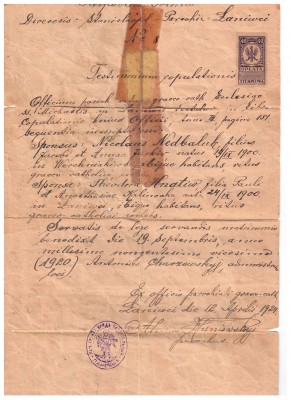
Hi, I believe the document provided is a marriage certificate although hard to decipher completely. If there is anyone out there that could provide clarification it would be appreciated, thank you
| Description: |
|
| Filesize: |
1.15 MB |
| Viewed: |
0 Time(s) |
|
|
|
|
dnowickiPO Top Contributor
Joined: 28 Dec 2011
Replies: 2954
Location: Michigan City, IndianaBack to top |
Posted: Sun Jan 18, 2026 10:22 pm
Post subject:
| dpatrick wrote: | | Hi, I believe the document provided is a marriage certificate although hard to decipher completely. If there is anyone out there that could provide clarification it would be appreciated, thank you |
Hi,
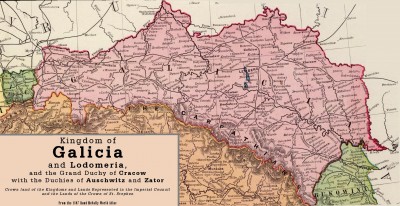
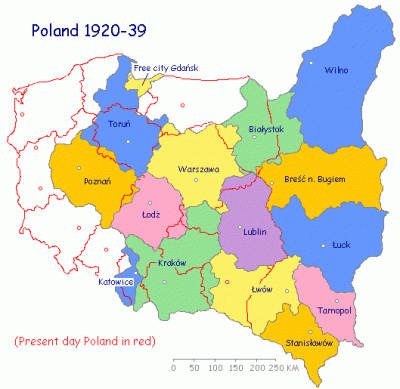
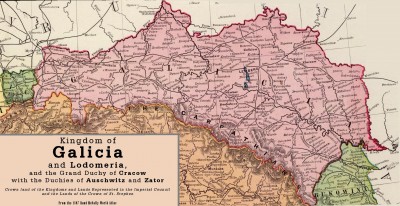
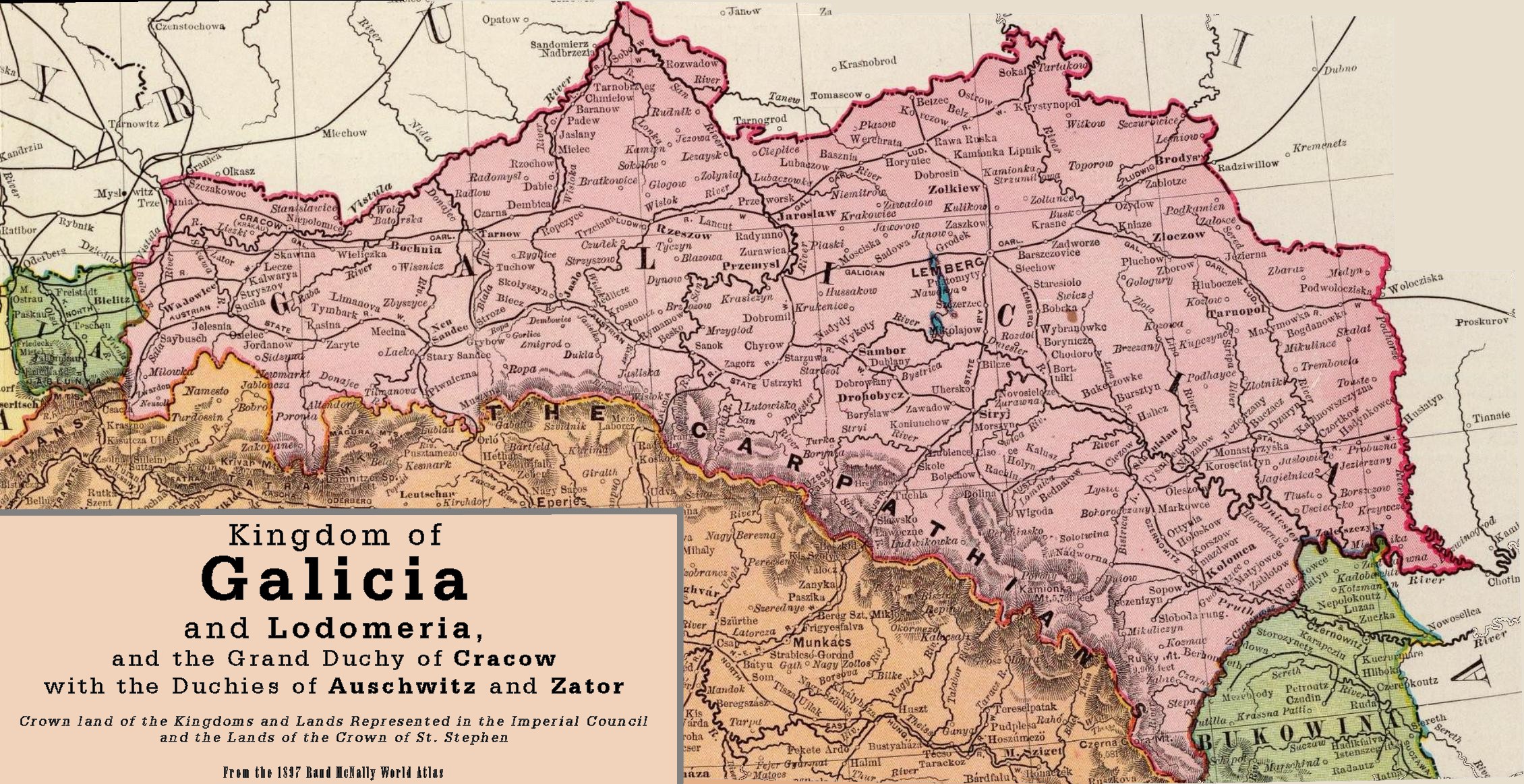
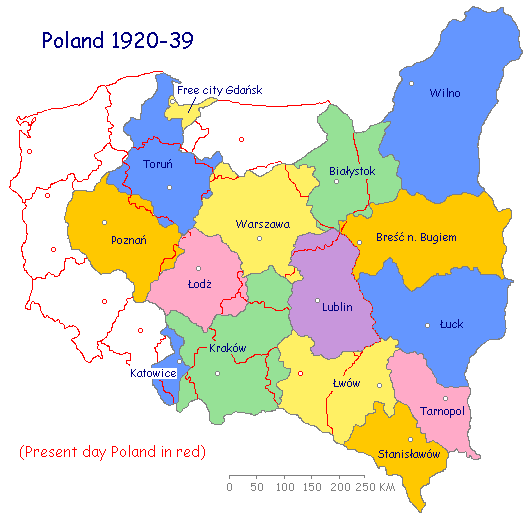
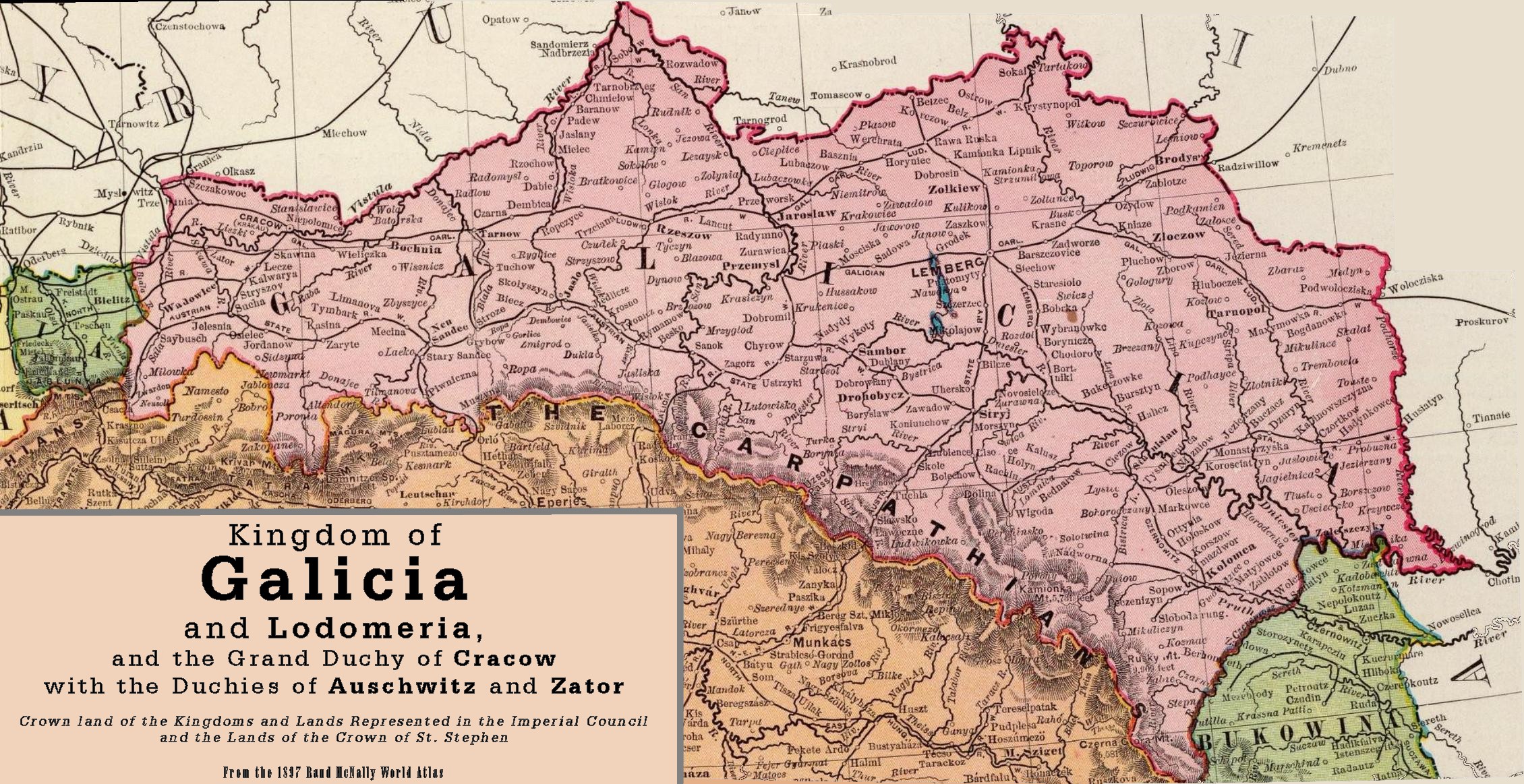
The document you posted is a marriage certificate issued on April 19th 12, 1924 For a wedding which took place on September 19th 1920 in the Greek Catholic (Ukrainian Catholic) parish of St Michael in Łanczyn. At the time of the birth of both spouses the area was part of Galicia (cf. Map). During the time between WW I and WW II the vllage was located within the boundaries of Poland in the woj. of Stanisławów (Cf. attached map) but obviously after WW II it is no longer in Poland but is in Ukraine. I will just extract the important data ignoring all the legal jargon. Parish church was under the patronage of Saint Michael in this particular marriage was recorded in the marriage register of the parish in volume two, page 151.
Given names will be translated from Latin into Polish.
The groom: Mikolaj Nedbaluk, the son of Jakób & Anna née Jurkiw. He was born on September 19, 1900 in Worchniakico(?), He was a bachelor.
The bride: Teodora H(?)natiw, the daughter of Pawel and Anaxtazja née Kalinocha(?). Sjhe was born 0n September 24, 1900. She was borm in Łanczyn. She was a maiden.
Both the bride and the groom were Greek (Ukrainian) Catholic.
The witnesses, who at the time would have both been men & today would be the best man & the maid/matron of honor, were not named in the certificate
Wishing you successful researching,
Dave
| Description: |
|
| Filesize: |
953.53 KB |
| Viewed: |
0 Time(s) |
|
| Description: |
|
| Filesize: |
13.19 KB |
| Viewed: |
0 Time(s) |
|
|
|
|
dpatrick
Joined: 14 Jan 2026
Replies: 3
Location: Edmonton Alberta CanadaBack to top |
Posted: Mon Jan 19, 2026 11:56 pm
Post subject:
Thank you Dave, very much appreciated.
|
|
|
cpkaway
Joined: 21 Jan 2024
Replies: 44
Location: CanadaBack to top |
Posted: Tue Jan 20, 2026 5:23 pm
Post subject: 1905 Death Record
Hello Dave or ?
I would appreciate help with parts of this attached death record.
Kropiński Gwalbertus
c.r. adjunctus viae ferr[arum]
maritus derelictae Gulielminae Pospischil
de Przemysl oriundus
1. What job would be adjunctus on the railway?
2. I assume "maritus derelictae" means "abandoned husband"
3. Would "oriundus Przemysl" mean "native of Przemysl"? In other words, Wilhelmina was not necessarily born in Przemysl but had lived there when she married Gwalbert.
Thank you
Chris
| Description: |
|
| Filesize: |
249.94 KB |
| Viewed: |
0 Time(s) |

|
|
|
|
dnowickiPO Top Contributor
Joined: 28 Dec 2011
Replies: 2954
Location: Michigan City, IndianaBack to top |
Posted: Thu Jan 22, 2026 11:44 am
Post subject: Re: 1905 Death Record
| cpkaway wrote: | Hello Dave or ?
I would appreciate help with parts of this attached death record.
Kropiński Gwalbertus
c.r. adjunctus viae ferr[arum]
maritus derelictae Gulielminae Pospischil
de Przemysl oriundus
1. What job would be adjunctus on the railway?
2. I assume "maritus derelictae" means "abandoned husband"
3. Would "oriundus Przemysl" mean "native of Przemysl"? In other words, Wilhelmina was not necessarily born in Przemysl but had lived there when she married Gwalbert.
Thank you
Chris |
Chris,
A reminder of a few basic things about the Latin language may help you to understand this entry. Latin is a highly inflected language which means that the endings of Latin words change to signify their use in a sentence. For nouns and adjectives the changes are known in grammatical terms as declensions. Latin nouns and adjectives consist of two parts— a stem and endings. Both parts are important. The stem gives the basic meaning of the word and the endings show how the word is being used. There are three genders for nouns—masculine, feminine, and neuter. Gender in Latin is not always sexual but more often than not is grammatical. A few examples… door/gate (porta) is feminine; consent (consensus) is masculine; road (via) is feminine. In English all those words are neuter. This is a major difference between Latin and English. Adjectives in Latin must agree with the noun they modify in case number and gender. Latin word order is not a matter of consequence whereas in English it certainly is. Participles are verbal adjectives and so therefore they must agree with the noun they modify in case number and gender. This is important in order to make sense of the entry you posted.
I will answer your questions and then explain why the answers are the way they are. Here are the questions and the answers.
1. What job would be adjunctus on the railway?
THE ADJECTIVE IS NOT REALLY A JOB. IT DESCRIBES HIS STATUS OR POSITION IN RELATION TO THE RAILROAD. Adiunctus is the Perfect Passive Participle of the verb adiungo, adiungere, adiunxi, adiunctum, to join, to attach. All it signifies is that he was attached to the railroad but is no more specific that that.
2. I assume "maritus derelictae" means "abandoned husband"
NO. IT DOES NOT. MARITUS IS MASCULINE. DERELICTAE IS GENITIVE SINGULAR FEMININE AND THUS MODIFIES GUIHELMINA RATHER THAN HER DECEASED HUSBAND. It can be best translated as “the husband of the surviving...”
3. Would "oriundus Przemysl" mean "native of Przemysl"? In other words, Wilhelmina was not necessarily born in Przemysl but had lived there when she married Gwalbert.
ORIUNDUS HAS NOTHING TO DO WITH WILHELMINA (GUIHELMINA). IT MODIFIES MARITUS (HER HUSBAND). Oriundus, orienda, oriendum is an adjective derived from the Latin verb orior, oriri, ortus sum, to arise, to spring from, to be born. (The principal parts of the verb don’t look anything like what you normally would expect of a Latin verb because it is what is known as a deponent verb. Deponent verbs lay aside their active voice forms and use the passive form instead. Since oriundus is masculine it modifies maritus (husband) which is a masculine noun. Thus it is Gwalbert who was born in Przemysl. The entry is silent regarding the place of birth of Wilhelmina which is perfectly normal because Gwalbert is the main focus of the entry. Wilhelmina only appears in the entry in a secondary role as his wife.
The entry should be translated: “Gwalbert Kropiński, attached to the railroad, the husband of the surviving Wilhelmina Pospischil, born in Przemysl.”
Another tidbit...viae ferr[arum] is a metaphysical fizzle. Viae is the Genitive SINGULAR of the noun via, viae, f. road so the adjective ferreus, ferrea, ferreum must agree with the noun. The two words should be viae ferreae (both Genitive Singular).
Some final words of wisdom… around 2 months ago someone on the forum asked whether there was any list of railroad related words in Latin for use in records from Galicia. The answer is no. Scribes tended to make up Latin words as they went along. A good example is how they described a steam powered railroad. Via ferrea, via ferrata, ferrivia, and ferrovia are just some examples of phrases used for a railroad. The terms are all very appropriate since the earliest railroads used rails of iron. However, iron rails had severe limitations. They had a propensity to buckle, warp, crack, etc. After the invention of the Bessemer converter and the open heart furnace in the years after the middle of the 19th century mass production of rolled steel rails became both practical and economic. How do I know anything about steel? I’ve got steel in my blood. After all cuts bleed a rusty color. (Ha,ha). The actual reason is that I grew up in South Chicago, which was a neighborhood in the shadow of the South Works of US Steel. The mill employed over 12,000 people and I worked there during the summers and part-time during the school year in undergrad and in grad school mostly in the rolling end and the finishing end of the beam mill. The 600 acre plant closed in the 1990s and despite what some politicians believe or claim to believe manufacturing jobs in the steel industry will not come back in this country.
That’s all I have to say today,
Wishing you success in remembering the Latin you once studied,
Dave
|
|
|
cpkaway
Joined: 21 Jan 2024
Replies: 44
Location: CanadaBack to top |
Posted: Thu Jan 22, 2026 11:23 pm
Post subject: Re: 1905 Death Record
Dave,
Wow! I really did get the translation wrong. Your corrected version presents an entirely different picture. I must brush up on my basic Latin including grammar. It is not sufficient enough to just know the words. The way you explained your translation shows how careful I must be to the word endings.
I was interested in the fact that the death record says he was born in Przemyśl because I found an 1890 book of previous Przemyśl high school graduates which says Gwalbert was born in Botuszany in Bessarabia, now Botoşani in Romania. I suppose either the school record or the death record is wrong, or their was another Gwalbert Kropinski.
Your aside about iron rails versus steel was quite enlightening. I never realized that the original iron rails had such problems, and probably were the cause of some accidents. I had to look up the Bessemer converter. To lose an industry that employed 12,000 people in just one plant must have had a devastating effect on the local area.
Thank you Dave for taking the time to give me such an interesting and useful explanation.
Regards
Chris
|
|
|
Posted: Sun Jan 25, 2026 10:20 am
Post subject: Translation Request
The following is my transcription of the birth record for Susanna Golke.
Kaźmierzewo
1805 ? 23 Julij Ego Mattheus Turski Curatus in Ruze Bapto Infan Nme Susannam, natam 22 ejusdem, Hon Michaelis Golka et Eva ? Latinim frere Hi Joannes Fayna et Anna Golkin de Colonia Kaźmierzewo
Please correct it and translate. No. 45 is attached.
| Description: |
|
| Filesize: |
1.32 MB |
| Viewed: |
0 Time(s) |

|
|
|
|
dnowickiPO Top Contributor
Joined: 28 Dec 2011
Replies: 2954
Location: Michigan City, IndianaBack to top |
Posted: Thu Jan 29, 2026 1:55 pm
Post subject: Re: Translation Request
| treich wrote: | The following is my transcription of the birth record for Susanna Golke.
Kaźmierzewo
1805 ? 23 Julij Ego Mattheus Turski Curatus in Ruze Bapto Infan Nme Susannam, natam 22 ejusdem, Hon Michaelis Golka et Eva ? Latinim frere Hi Joannes Fayna et Anna Golkin de Colonia Kaźmierzewo
Please correct it and translate. No. 45 is attached. |
Hi treich,
Short paragraph Baptismal records usually contain the number of contractions of the words entered. This acts as a sort of shorthand which was easily understood by all Catholic priests. Once a priest chose the format he wanted to use for the records he seldom deviated from that format. Rather than write out all of the stock phrases in full he employed shorthand to save time and energy. However, when transcribing the record it is necessary to supply the complete words rather than the short hand version. The fact that short hand is being applied is indicated but how the word ends that is usually with an either rising or descending squiggle. It is also indicated by dots above the word. In order for the Latin text to make sense the shorthand needs to be converted to the standard complete form of the Latin words. Corrections to your transcription will appear in upper case letters. The corrected version and the translation follow.
Dave
Transcription:
Kaźmierzewo
1805 DIE 23 Julij Ego MatthAEus Turski Curatus in Ruze BaptIZAVI InfanTEM NOmINe Susannam, natam 22 ejusdem, HonESTORUM* Michaelis Golka et EvAE L.C.** PatiniNI fUere HONESTi* Joannes Fayna et Anna Golkin OMNES de Colonia Kaźmierzewo.
Translation:
On the 23rd day of July 1805 I Mateusz Turski, the curate in Ruze baptizedan infant by the name of Zuzanna, born on the 22nd (of the same month and year) of the legitimate/legal spouses**, the upright* Michał and Ewa Golka. The sponsors were the upright* Jan Fayna and Anna Golkin, all from Kolonia Kaźmierzewo.
Notes:
*honestus/upright: an adjective usually used for a farmer from a village or a small town.
**L.C. Is a frequently used standard abbreviation which in this case would read in full “Legitimi Conjuges” (Legal/Legitimate Spouses).
|
|
|
Posted: Thu Feb 12, 2026 5:39 pm
Post subject: two baptismal records
Hello!
I'm helping my stepfather do some genealogical research, and I'm having trouble parsing some baptismal records that are mostly Latin (with Polish names). I've got a PhD in classical philology, but that's not helping me decipher 19th-century Christian abbreviations and Polish handwriting. Any help with would be appreciated.
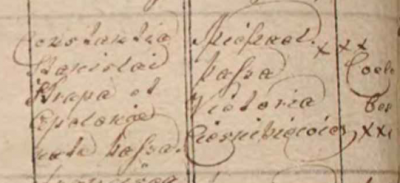
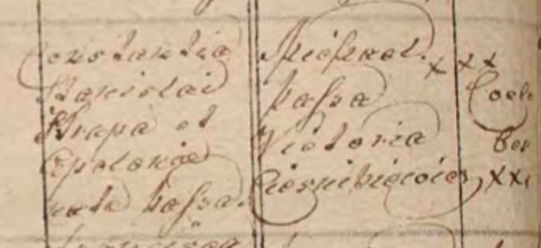
For Victoria, I'm at a near total loss once I get past name and date. We're really only concerned with reading the information about the mother and godparents, so that's what I've attached.
I can clearly see the mother's name is Constantia, and I think I see Krupa in the third line. Other records around this one include nata (I assume for a maiden name), which is possibly in the last line?
For the godparents, I can't make sense of the godfather's name (I keep hallucinating Richard), but I can see that he was 30. For the godmother, I see Victoria Cies... and the fact that she's 21. And then coelibes (unmarried) again.
For Anna, I'm on a much surer footing. I'm mainly uncertain about a few names and the precise translations of famula and coelibes in this period. I'm curious what the Exp. after the priest's name means. All I can think of is episcopus, but I doubt bishops do much baptizing.
born August 5, 1881
baptized August 7, 1881
midwife: Victoria Ziȩba
baptized by Josephus Grabowski Exp.
Catholic / girl / illegitimate
mother's name and status: Victoria Krupa, illegitimate daughter of the maid-servant [famulae] Constantia
godparents: Franciscus Hycek and Anna J....., unmarried [coelibes?]
Any help would be greatly appreciated! And if questions of Polish transcription belong elsewhere, please let me know. Thanks!
-Patrick
| Description: |
| relevant portions of Victoria's record. |
|
| Filesize: |
165.61 KB |
| Viewed: |
0 Time(s) |
|
| Description: |
|
| Filesize: |
250.46 KB |
| Viewed: |
0 Time(s) |

|
|
|
|
SophiaPO Top Contributor
Joined: 05 Oct 2014
Replies: 1547
Back to top |
Posted: Fri Feb 13, 2026 5:36 am
Post subject: Re: two baptismal records
| patdski wrote: | Hello!
I'm helping my stepfather do some genealogical research, and I'm having trouble parsing some baptismal records that are mostly Latin (with Polish names). I've got a PhD in classical philology, but that's not helping me decipher 19th-century Christian abbreviations and Polish handwriting. Any help with would be appreciated.
For Victoria, I'm at a near total loss once I get past name and date. We're really only concerned with reading the information about the mother and godparents, so that's what I've attached.
I can clearly see the mother's name is Constantia, and I think I see Krupa in the third line. Other records around this one include nata (I assume for a maiden name), which is possibly in the last line?
For the godparents, I can't make sense of the godfather's name (I keep hallucinating Richard), but I can see that he was 30. For the godmother, I see Victoria Cies... and the fact that she's 21. And then coelibes (unmarried) again.
For Anna, I'm on a much surer footing. I'm mainly uncertain about a few names and the precise translations of famula and coelibes in this period. I'm curious what the Exp. after the priest's name means. All I can think of is episcopus, but I doubt bishops do much baptizing.
born August 5, 1881
baptized August 7, 1881
midwife: Victoria Ziȩba
baptized by Josephus Grabowski Exp.
Catholic / girl / illegitimate
mother's name and status: Victoria Krupa, illegitimate daughter of the maid-servant [famulae] Constantia
godparents: Franciscus Hycek and Anna J....., unmarried [coelibes?]
Any help would be greatly appreciated! And if questions of Polish transcription belong elsewhere, please let me know. Thanks!
-Patrick |
Hello Patrick,
It would be helpful for Dave to have a link to each of these scans; it makes deciphering the handwriting much easier. Here is the link to Wiktoria's baptism:
https://skanoteka.genealodzy.pl/index.php?op=pg&id=4236&se=&sy=3610&kt=1&plik=152.jpg&x=379&y=814&zoom=1.75
And here is the link to Anna's baptism:
https://skanoteka.genealodzy.pl/index.php?op=pg&id=4236&se=&sy=3695&kt=1&plik=005.jpg&x=0&y=159&zoom=2.25
These are from the church in Rzochów in woj. Podkarpackie.
To my eye, the surname of the one godmother is Cieśnikiewicz.
Best regards,
Sophia
|
|
|
Posted: Fri Feb 13, 2026 8:50 am
Post subject: Re: two baptismal records
Many thanks, Sophia! I considered posting those links but saw others posting images. I should have done both.
Best, Patrick
|
|
|
dnowickiPO Top Contributor
Joined: 28 Dec 2011
Replies: 2954
Location: Michigan City, IndianaBack to top |
Posted: Sat Feb 14, 2026 10:12 am
Post subject: Re: two baptismal records
| patdski wrote: | Hello!
I'm helping my stepfather do some genealogical research, and I'm having trouble parsing some baptismal records that are mostly Latin (with Polish names). I've got a PhD in classical philology, but that's not helping me decipher 19th-century Christian abbreviations and Polish handwriting. Any help with would be appreciated.
For Victoria, I'm at a near total loss once I get past name and date. We're really only concerned with reading the information about the mother and godparents, so that's what I've attached.
I can clearly see the mother's name is Constantia, and I think I see Krupa in the third line. Other records around this one include nata (I assume for a maiden name), which is possibly in the last line?
For the godparents, I can't make sense of the godfather's name (I keep hallucinating Richard), but I can see that he was 30. For the godmother, I see Victoria Cies... and the fact that she's 21. And then coelibes (unmarried) again.
For Anna, I'm on a much surer footing. I'm mainly uncertain about a few names and the precise translations of famula and coelibes in this period. I'm curious what the Exp. after the priest's name means. All I can think of is episcopus, but I doubt bishops do much baptizing.
born August 5, 1881
baptized August 7, 1881
midwife: Victoria Ziȩba
baptized by Josephus Grabowski Exp.
Catholic / girl / illegitimate
mother's name and status: Victoria Krupa, illegitimate daughter of the maid-servant [famulae] Constantia
godparents: Franciscus Hycek and Anna J....., unmarried [coelibes?]
Any help would be greatly appreciated! And if questions of Polish transcription belong elsewhere, please let me know. Thanks!
-Patrick |
Hi Patrick,
It is good that Sophia provided links to the scans of the records. Had she not done so I would have requested the links. No longer being on the Summer Side of Life I find it difficult to see with clarity handwriting in screenshots since my vision is not what it once was. Before we get into the information in the records perhaps a few remarks may help to clarify a some points regarding Latin records from Galicia. Although these records were used by the parish priests during the 19th century and a copy of the records was housed in the parish office the metrical books are not ecclesiastical records per se, but are civil records masquerading as ecclesiastical records. Parish priests were tasked with acting as civil registrars. Since multiple copies were needed the parish priest usually hired someone who had a modicum of Latin knowledge to do the busy work of producing the required copies. The language found in the records is very rudimentary and with the exception of a portion of marriage records is not in the form of complete sentences.
Since Franz Joseph I was Emperor of Austria, King of Hungary, and the ruler of the other states of the Habsburg monarchy from December 2, 1848 until his death in 1916 the records you posted were created during his reign and much of their format and content were mandated by him. He came to power during the revolutionary period commonly known as “The Springtime of the Peoples”. Although he reluctantly made some concessions and modifications to policies of his absolute monarchy he was a reactionary who seemed to be mainly interested in protecting the House of Habsburg from morganatic marriages like the marriage between his heir apparent Archduke Franz Ferdinand to Sophie Countess of Chotek. Franz Joseph did allow one significant change, the emancipation of the peasants from their feudal obligations, which had a lasting impact throughout the remaining history of the Empire.
Since the Austrian Empire was a multi-ethnic state with no common language the Empress Maria Theresa chose Latin as the language to be used for the keeping of vital records when Austria seized the southern lands of the Polish-Lithuanian Commonwealth as part of the First Partition of Poland in 1772. The Commonwealth was formally known as The Kingdom of Poland and the Grand Duchy of Lithuania (Polish: Królestwo Polskie i Wielkie Księstwo Litewskie; Latin: Regnum Poloniae Magnusque Ducatus Lithuaniae) Although Sophia is correct in writing that the parish Rzochów is currently in województwo podkarpackie when Austria seized and ruled the region the area was known as the Kingdom of Galicia and Lodomeria from 1772 until after the end of WWI when it became part of the Second Polish Republic. After WWII eastern Galicia became part of Ukraine. Although online records from the region seem to exist only after 1772, sacramental records were mandated by the Council of Trent in 1575 and in other regions of Poland date from about 1600 when the decrees of the Council were implemented.
Here are two links which you may find interesting and/or helpful: https://parafie.genealodzy.pl/index.php?op=pr&pid=5040
https://mapa.szukacz.pl/mapnik.html
On to the main topic...In the metrical records given names appear in their Latin form, surnames in the vernacular, place names in the vernacular with the occasional exception of the names of dioceses and parishes which are transformed into Third Declension Latin adjectives. My favorite example is Chicago, where I was born and educated and taught. The adjectival form is Chicagiensis.
In my view, Latin given names of individuals who lived their entire lives in Galicia/Poland are best translated into their Polish version. I’ll attach a PDF list of Latin names I’ve encountered which include both their English and Polish versions.
B&B of Anna:
Vocabulary: famula,ae,f.: a female servant (She resided with the family living in house #7 in Rzochów. What she actually did as a servant is not specified. According to the Słownik Geograficzny Królestwa Polskiego http://dir.icm.edu.pl/pl/Slownik_geograficzny/Tom_X/167 Rzochów was located on the Karol Ludwik (Carl Ludvig) railroad line and had a railroad station. It had a wooden Catholic church constructed in 1843. The parish was founded in 1312. In the late 19th Century there were 132 houses. The population was 740—582 Roman Catholics and 158 Jewish. Many of the inhabitants were farmers.
Coelebs, coelebis [also caelebs, caelebis], (adjective) unmarried, single [more frequently of males], bachelor.
Priest: Bapt(izavi) Josephus Grabowski Ego—I, Józef Grabowski, baptized (her).
Mother: Wiktoria Krupa, the illegitimate daughter of Konstancja, a servant.
Sponsors aka godparents: Franciszek Hycek & Anna Janiak, (both) unmarried/single
B&B of Wiktoria
House # 49 Priest: Ego, (illegible to me), Coop(erator) loci (baptizavi eam) I, (illegible), assistant pastor of the place (baptized her).
The mother: Constantia (filia) Ladislai* Krupa et Apoloniae natae Kasza =
Konstancja (the daughter) of Władysław* Krupa & Apolonia born/née Kasza
The sponsors/godparents: ?? Kasza, a bachelor (&) Wiktoria Cieśnikiewicz
*Pure Polish/Slavic given names have an English version which is the same as the Latin form. The English form of Władysław is the same as the Latin—Ladislaus. Masculine names belong to the Second Declension. The feminine Polish version of Władysław is Władysława. The Latin is Ladislava/Ladislaa and, of course, belongs to the First Declension. Again, the English is the same as the Latin. Many immigrants to the USA used English names which had a somewhat similar initial sound to the Polish. Thus, Władysław became Walter/Wally and Stanisław became Stanley, although those English names had nothing to do with the Polish name.
Please find attached an 1897 map of Galicia and a PDF of Latin given names with their Polish & English translations.
Wishing you success and joy in helping your stepfather with his genealogy,
Dave
| Description: |
|
| Filesize: |
953.53 KB |
| Viewed: |
1 Time(s) |
|
| Description: |
|

Download |
| Filename: |
GIVEN NAMES-LATIN, ENGLISH, POLISH 4 September 2024.pdf |
| Filesize: |
185.41 KB |
| Downloaded: |
1264 Time(s) |
|
|
|
Posted: Sat Feb 14, 2026 10:38 am
Post subject: Re: two baptismal records
| dnowicki wrote: | Wishing you success and joy in helping your stepfather with his genealogy,
Dave |
Thanks so much, Dave! The PDF of names will be particularly handy.
|
|
|
PolishLibrarianPO Top Contributor
Joined: 28 Aug 2010
Replies: 323
Back to top |
Posted: Sun Mar 01, 2026 6:35 pm
Post subject: Latin record clarification
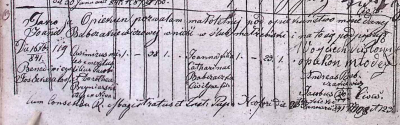
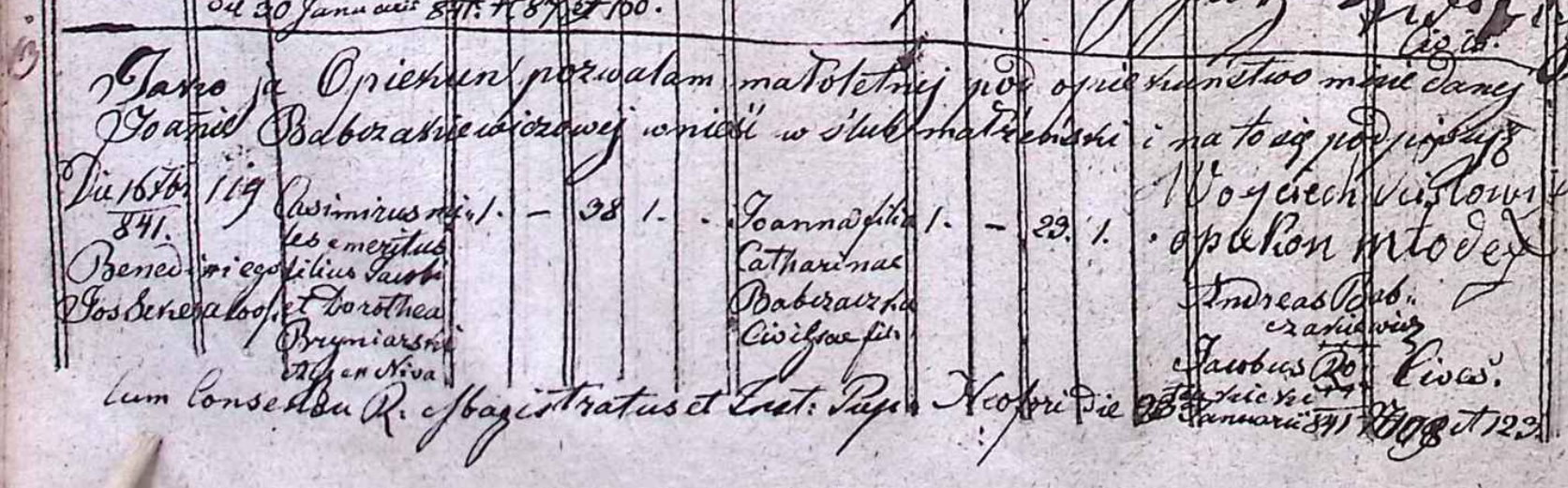
Link to the record as well https://metryki.genealodzy.pl/index.php?op=pg&id=4730&se=&sy=4505&kt=1&plik=039.jpg
I transcribe the following:
Married 16 Feb 1841 at #119. Casimirus ? emeritus filius Jacob and Dorothea Bryniarski of Niva, single, 38y. Joanna daugh. of Catharina Babczaka, single, 23y. Witnesses: Andreas Babczakiewicz and Jacob Rokucki.
Translate: Kaziemierz ? emeritus (what does this phrase mean?) son of Jakub and Dorota Bryniarska of Niwa, single, 38y. Janina daughter of Katarzyna Babczak. Witnesses: Andrzej Babczakiewicz (this would be Janina's uncle, my ggGrandfather) and Jakub Rokucki.
The big long (2+ lines) across the top of the record I assume is regarding the underage bride. Joannes Babczakiewieczowej (sure glad I didn't have to learn how to spell this in first grade  ). Is this Janina's name or is it referring to her eldest brother Jan who would be 33 in 1841? Janina was born to the unmarried Katarzyna in 1819, so there is no father to give permission for the marriage. I don't need an exact translation, just the overall meaning. ). Is this Janina's name or is it referring to her eldest brother Jan who would be 33 in 1841? Janina was born to the unmarried Katarzyna in 1819, so there is no father to give permission for the marriage. I don't need an exact translation, just the overall meaning.
Is there anything important in the note across the bottom?
Thank you for your time.
~PL
| Description: |
|
| Filesize: |
1.7 MB |
| Viewed: |
0 Time(s) |
|
|
|
|
|
|
|











 FAQ
FAQ Search
 Memberlist
 Profile
 Log in to check your private messages
 Log in
 Register