TedMack
Joined: 12 Jun 2020
Replies: 547
Location: Sydney, AustraliaBack to top |
 Posted: Fri Aug 14, 2026 2:29 am
Post subject: Latin Record Translation
Posted: Fri Aug 14, 2026 2:29 am
Post subject: Latin Record Translation
G'day Dave
Back again - I seem to struggle more with marriage records - abbreviations and some new terminology. Can you please check these and let me know where I have gone wrong.
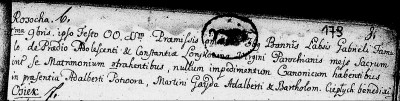
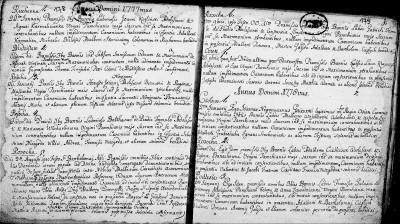
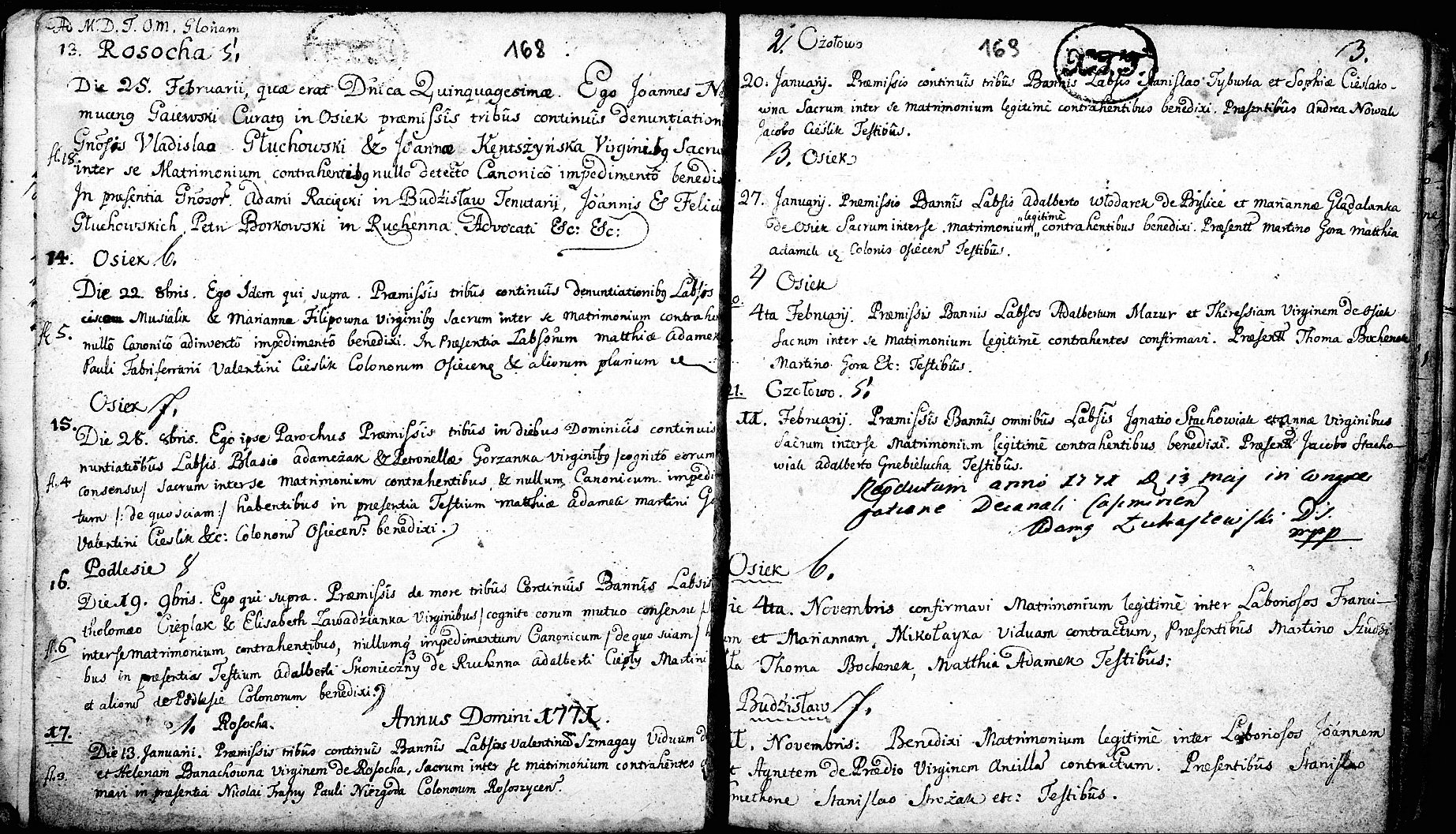
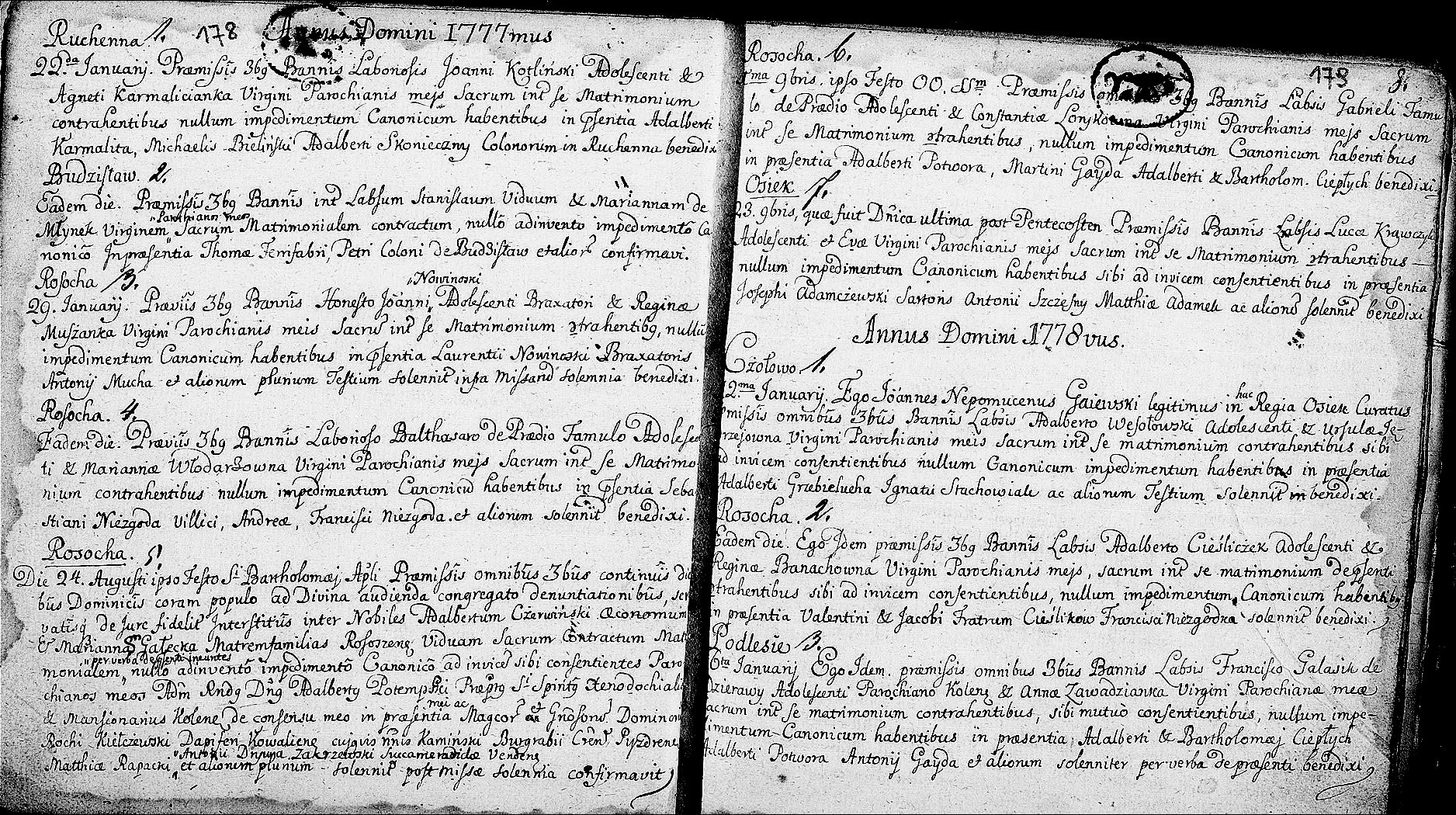
village Rosocha, par. Osiek Wielki, Koło 1777
1st November, itself a feast day (All Saints Day) abbr? abbr? after the proclamation of all 3 banns the hardworking Gabryel (Lewandowski), servant from the estate, bachelor, and Kanstancya Lorykowna, maiden, from this parish, received the sacraments of marriage, and no Canonical impediment standing in the way they were blessed before the witnesses present, Wojciech Potwora, Marcin Gayda, Wojciech & Bartłomiej Ciepły.
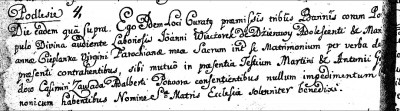
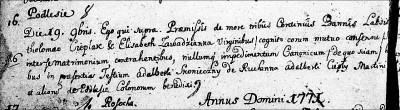
village Podlesie, par. Osiek Wielki, Koło 1779
On the same day as above (31st January) I as above Curate of this place after the proclamation of three banns before the people present and the divine audience, hardworking Jan Wiecżorek from Dźierawy, bachelor and Marianna Ciepła, maiden, received the sacraments of marriage, they were brought together by mutual consent before the witnesses present Marcin & Antoni Gaydow, Kazimierz Zawada, Wojciech Potwora, and no Canonical impediment standing in the way ???? (something about property?) they were blessed in St Matris church?
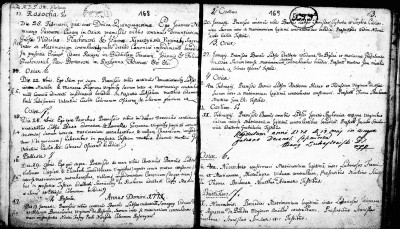
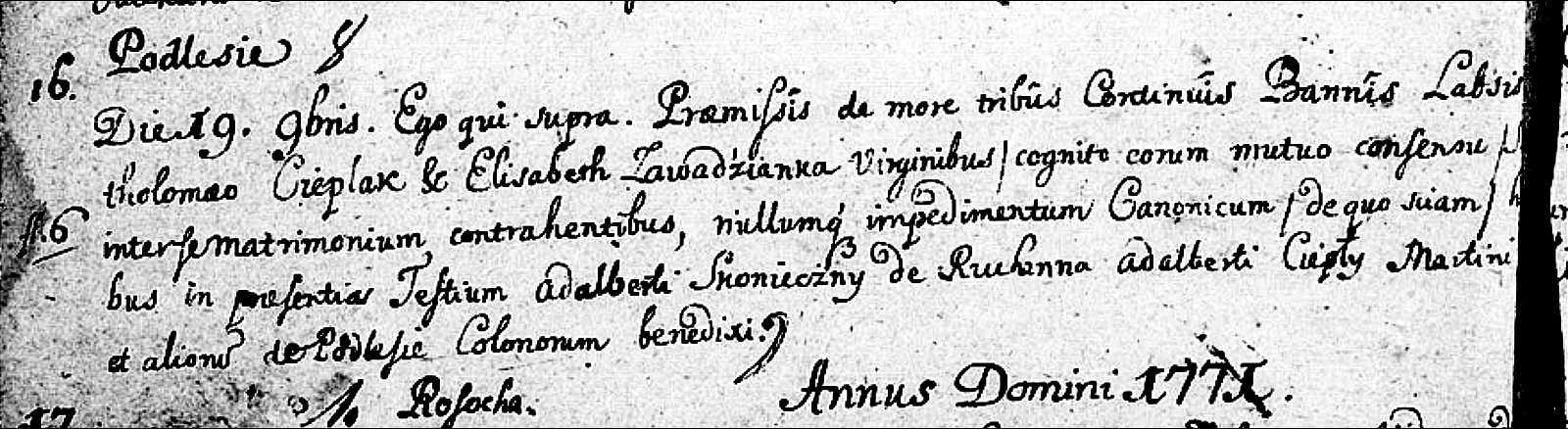
village Podlesie, par. Osiek Wielki, Koło 1770
Left Margin – unknown reference
Body of entry: On 19th November I as above after the proclamation of 3 banns married hardworking Bartłomej Ciepły and Elżbieta Zawadźianka, maiden, in the presence of those present and by mutual consent and no Canonical impediment standing in the way blessed before the witnesses present Wojciech Snonieczny from Ruchana, Wojiech Ciepły and Marcin and other colonists.
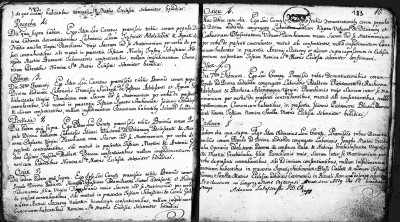
Full page records and cropped.
Cheers
Ted
| Description: |
|
| Filesize: |
203.61 KB |
| Viewed: |
0 Time(s) |
|
| Description: |
|
| Filesize: |
761.71 KB |
| Viewed: |
0 Time(s) |
|
| Description: |
|
| Filesize: |
208.53 KB |
| Viewed: |
0 Time(s) |
|
| Description: |
|
| Filesize: |
707.6 KB |
| Viewed: |
0 Time(s) |
|
| Description: |
|
| Filesize: |
243.88 KB |
| Viewed: |
0 Time(s) |
|
|
|
|
TedMack
Joined: 12 Jun 2020
Replies: 547
Location: Sydney, AustraliaBack to top |
Posted: Fri Aug 14, 2026 2:30 am
Post subject: Latin Record Translation
And the missing full page
Ted
| Description: |
|
| Filesize: |
928.05 KB |
| Viewed: |
0 Time(s) |
|
|
|
|
TedMack
Joined: 12 Jun 2020
Replies: 547
Location: Sydney, AustraliaBack to top |
Posted: Sun Aug 16, 2026 7:16 am
Post subject: Latin Record Translation
G'day Dave
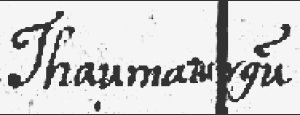
I'm going through translating some B&B records and have been stumped by a name the priest has added to a record. I make the name to be "Thaumarurgu" with an abbreviation mark. This has me stumped. The best I can come up with is that it is a reference to 'Thaumas' an ancient greek sea God. Could it be an attempt at being cute and it should be Thomae?
Just wondering if you have ever come across this before?
Or should I say "it's all Greek to me" as in Shakespeare's play Julius Caesar and just ignore it.
"Graecum est, non legitur"
Cheers
Ted
| Description: |
|
| Filesize: |
8.98 KB |
| Viewed: |
413 Time(s) |
|
| Description: |
|
| Filesize: |
134.23 KB |
| Viewed: |
0 Time(s) |

|
|
|
|
dnowickiPO Top Contributor
Joined: 28 Dec 2011
Replies: 2962
Location: Michigan City, IndianaBack to top |
Posted: Sun Aug 16, 2026 1:57 pm
Post subject: Re: Latin Record Translation
| TedMack wrote: | G'day Dave
I'm going through translating some B&B records and have been stumped by a name the priest has added to a record. I make the name to be "Thaumarurgu" with an abbreviation mark. This has me stumped. The best I can come up with is that it is a reference to 'Thaumas' an ancient greek sea God. Could it be an attempt at being cute and it should be Thomae?
Just wondering if you have ever come across this before?
Or should I say "it's all Greek to me" as in Shakespeare's play Julius Caesar and just ignore it.
"Graecum est, non legitur"
Cheers
Ted |
Hi Ted,
The simple one first… Thaumaturgus distinguishes his patron saint, Gregory Thaumaturgus (Gregory the Miracle-Worker) from the many other saints named Gregory. He is also known as Gregory of Neocaesarea. His feast day and thus the child’s Name Day is November 17. Gregorius Thaumaturgus is the Latin form of the saint’s name in Greek, Γρηγόριος ὁ Θαυματουργόs. The dude lived during the 3rd Century when the common language of the Roman Empire and the entire known world at that time was still Greek rather than Latin.
The marriage records will require a longer and more detailed explanation since they employ a style and vocabulary you have not previously seen. The usual records have more in common with the straightforward historical prose of Caesar whereas these records have more in common with the complex oratorical style of Golden Age Latin.
My response has been delayed due to weather issues during the past two weeks. Severe storms have trained from the southern suburbs of Chicago across Northwest Indiana. Our immediate area has been spared the worst but strong thunderstorms knocked out our electrical power for two days this past week—thus no lights, no internet, and, worst of all, no AC. It has rained every day for the past two weeks with temps between 86 & 90 degrees Fahrenheit (30-32 degrees Celsius). The rain, heat and humidity has resulted in massive growth of garden plants. Since I grow heirloom indeterminate tomatoes it has been necessary to increase the height of their supports together with harvesting ripe fruits. Thus I can paraphrase Scrooge...My garden occupies me constantly. I will explain the marriage docs as soon as I can.
A question about your garden pests...are foxes an imported invasive species in Australia? It sounds like you need Elmer Fudd’s shotgun to deal with those pesky foxes.
Until (relatively) soon,
Dave
|
|
|
TedMack
Joined: 12 Jun 2020
Replies: 547
Location: Sydney, AustraliaBack to top |
Posted: Mon Aug 17, 2026 2:10 am
Post subject: Re: Latin Record Translation
| dnowicki wrote: | | TedMack wrote: | G'day Dave
I'm going through translating some B&B records and have been stumped by a name the priest has added to a record. I make the name to be "Thaumarurgu" with an abbreviation mark. This has me stumped. The best I can come up with is that it is a reference to 'Thaumas' an ancient greek sea God. Could it be an attempt at being cute and it should be Thomae?
Just wondering if you have ever come across this before?
Or should I say "it's all Greek to me" as in Shakespeare's play Julius Caesar and just ignore it.
"Graecum est, non legitur"
Cheers
Ted |
Hi Ted,
The simple one first… Thaumaturgus distinguishes his patron saint, Gregory Thaumaturgus (Gregory the Miracle-Worker) from the many other saints named Gregory. He is also known as Gregory of Neocaesarea. His feast day and thus the child’s Name Day is November 17. Gregorius Thaumaturgus is the Latin form of the saint’s name in Greek, Γρηγόριος ὁ Θαυματουργόs. The dude lived during the 3rd Century when the common language of the Roman Empire and the entire known world at that time was still Greek rather than Latin.
The marriage records will require a longer and more detailed explanation since they employ a style and vocabulary you have not previously seen. The usual records have more in common with the straightforward historical prose of Caesar whereas these records have more in common with the complex oratorical style of Golden Age Latin.
My response has been delayed due to weather issues during the past two weeks. Severe storms have trained from the southern suburbs of Chicago across Northwest Indiana. Our immediate area has been spared the worst but strong thunderstorms knocked out our electrical power for two days this past week—thus no lights, no internet, and, worst of all, no AC. It has rained every day for the past two weeks with temps between 86 & 90 degrees Fahrenheit (30-32 degrees Celsius). The rain, heat and humidity has resulted in massive growth of garden plants. Since I grow heirloom indeterminate tomatoes it has been necessary to increase the height of their supports together with harvesting ripe fruits. Thus I can paraphrase Scrooge...My garden occupies me constantly. I will explain the marriage docs as soon as I can.
A question about your garden pests...are foxes an imported invasive species in Australia? It sounds like you need Elmer Fudd’s shotgun to deal with those pesky foxes.
Until (relatively) soon,
Dave |
Thanks Dave
That was rather simple - obviously my Google search was poor.
Pity about those storms - we seem to get our severe storms mainly in Spring (although we do occasionally get them later in summer). You must be very patient with your tomatoes, or you don't have any pests to control.
Foxes were introduced as were rabbits by the British mainly for their recreational sport, there were no natural enemies so they flourished and were declared pests within 20 years- Elmer would have been in his element many years ago - now you need a license (at cost of course) to do anything. They mainly bait the foxes, so the native wildlife has rejuvenated, good in the natural environments but not suited to urban sprawl. A bit like eucalyptus trees, great in the forests but deadly in the suburbs - they lose limbs quite easily in strong winds and the oil within burns well.
When time permits for those marriage records.
Cheers
Ted
|
|
|
dnowickiPO Top Contributor
Joined: 28 Dec 2011
Replies: 2962
Location: Michigan City, IndianaBack to top |
Posted: 6 Days ago at 8:08 am
Post subject: Re: Latin Record Translation
| TedMack wrote: | G'day Dave
Back again - I seem to struggle more with marriage records - abbreviations and some new terminology. Can you please check these and let me know where I have gone wrong.
village Rosocha, par. Osiek Wielki, Koło 1777
1st November, itself a feast day (All Saints Day) abbr? abbr? after the proclamation of all 3 banns the hardworking Gabryel (Lewandowski), servant from the estate, bachelor, and Kanstancya Lorykowna, maiden, from this parish, received the sacraments of marriage, and no Canonical impediment standing in the way they were blessed before the witnesses present, Wojciech Potwora, Marcin Gayda, Wojciech & Bartłomiej Ciepły.
village Podlesie, par. Osiek Wielki, Koło 1779
On the same day as above (31st January) I as above Curate of this place after the proclamation of three banns before the people present and the divine audience, hardworking Jan Wiecżorek from Dźierawy, bachelor and Marianna Ciepła, maiden, received the sacraments of marriage, they were brought together by mutual consent before the witnesses present Marcin & Antoni Gaydow, Kazimierz Zawada, Wojciech Potwora, and no Canonical impediment standing in the way ???? (something about property?) they were blessed in St Matris church?
village Podlesie, par. Osiek Wielki, Koło 1770
Left Margin – unknown reference
Body of entry: On 19th November I as above after the proclamation of 3 banns married hardworking Bartłomej Ciepły and Elżbieta Zawadźianka, maiden, in the presence of those present and by mutual consent and no Canonical impediment standing in the way blessed before the witnesses present Wojciech Snonieczny from Ruchana, Wojiech Ciepły and Marcin and other colonists.
Full page records and cropped.
Cheers
Ted |
Hi Ted,
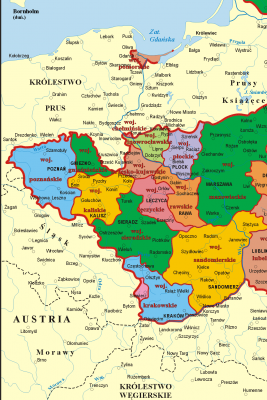
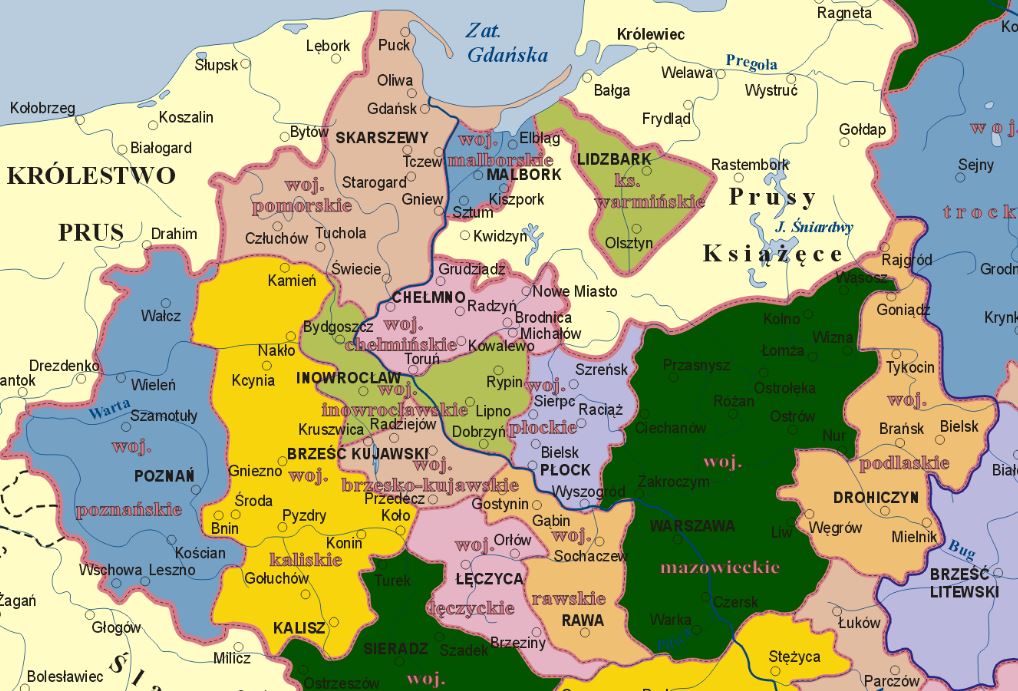
A few preliminary notes...All the marriages took place while the Polish-Lithuanian Commonwealth was still in existence. The 1770 marriage took place prior to the First Partition and the remaining marriages prior to the Second Partition in 1793. All took place in woj. kaliskie but the 1777 and 1779 marriages in a smaller woj. Kaliskie. All the records are purely ecclesiastical since the Commonwealth had no system of civil registration. The style, vocabulary and content of the records is similar but not identical in each record and also is heavily ecclesiastical according to what was in use during the 18th Century and also employs the old feudal terminology of the Commonwealth. The Latin reflects the Golden Age oratorical style—an example...the subject is found in the first line whereas the verb is the final word of the text. Ancient Romans would have understood the style but did not speak that way in everyday life. Only one Ablative Absolute appears in the text but participles are used continually. The word order is good Latin but is not good English. Your translation of the opening liners is fine but the rest is not so great. Anyway, here follows an accurate translation. However, by remaining faithful to the Latin the English remains stilted and results in a run on sentence but such is the nature of the beast.
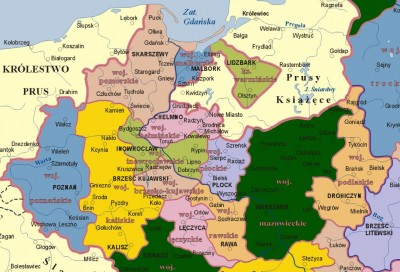
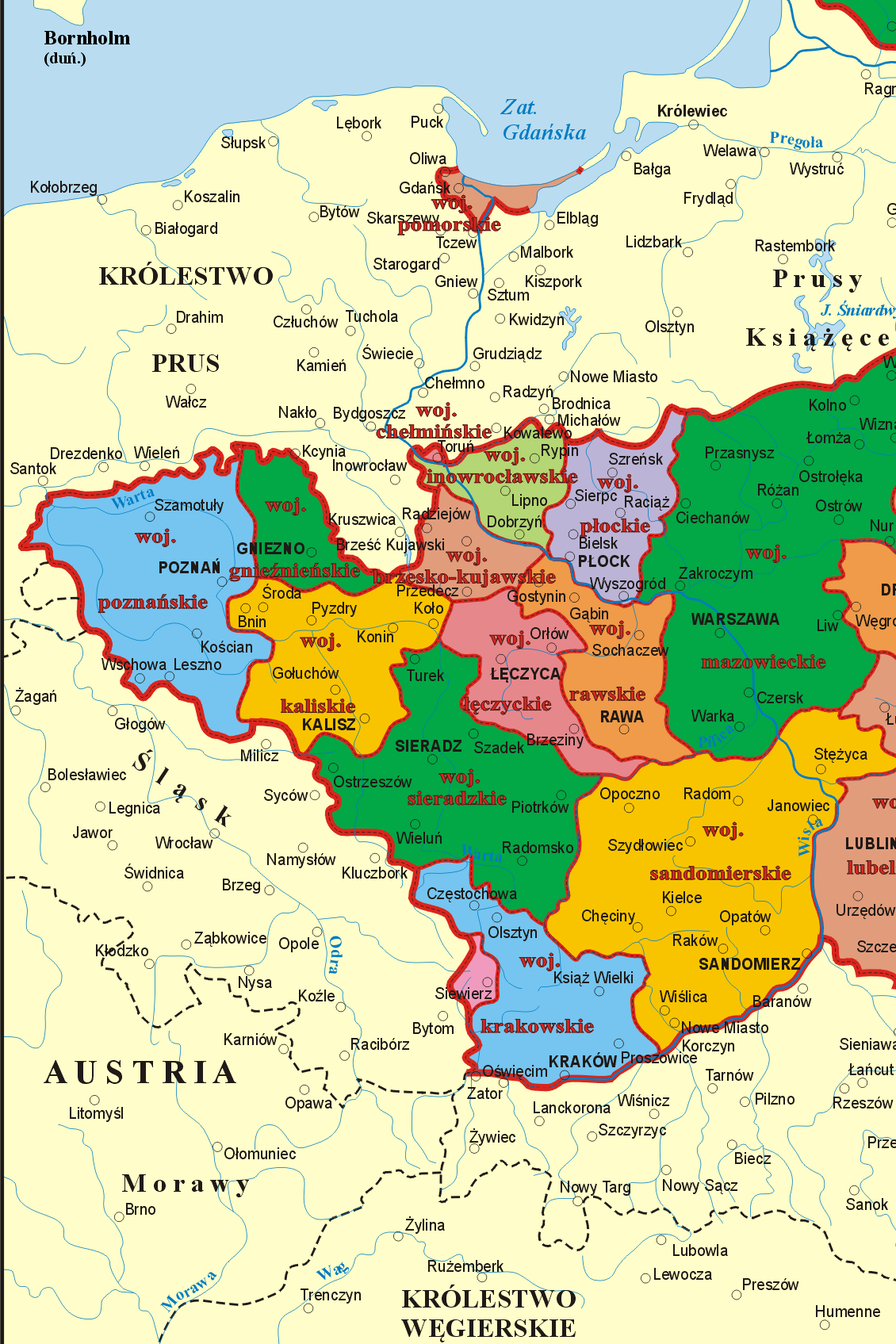
Attached are two maps of the western region of the Polish-Lithuanian Commonwealth (Rzeczpostpolita Obojga Naradów), one prior to the First Partition of 1772 and the second prior to the Second Partition of 1793. The maps show how woj. Kaliskie shrank following the First Partition.
Village Podlesie, par. Osiek Wielki, Koło 1779
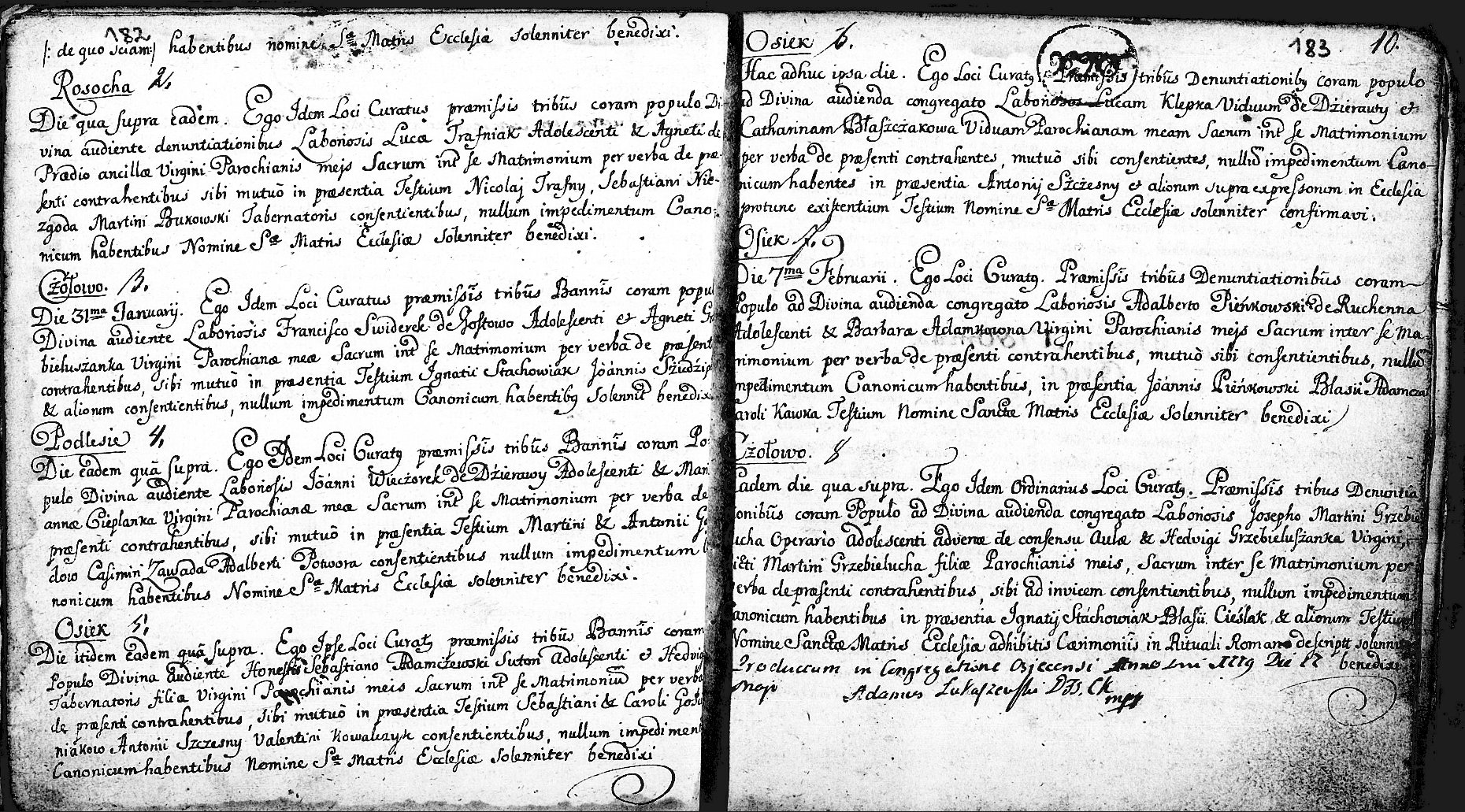
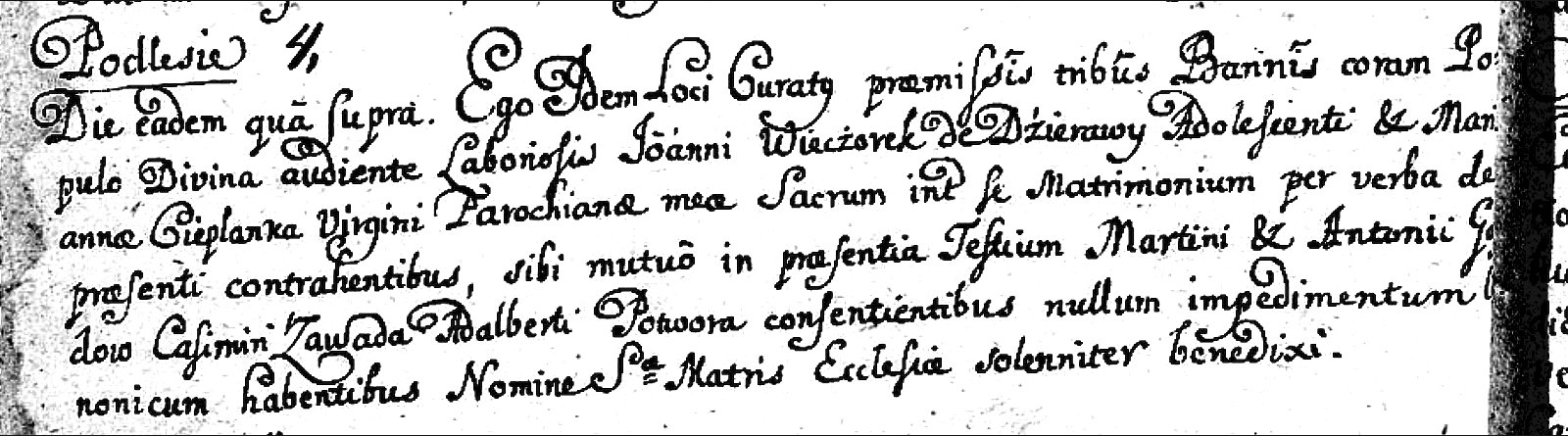
On the same day which is above (31st January) I as above Curate of this place after the proclamation of three banns before the people hearing the Divine Rites* (&) not having any Canonical impediment, in the name of Holy Mother Church** solemnly blessed the holy marriage of the industrious Jan Weczorek from Dźierawy, a bachelor, and Maryanna Cieplanka***, my**** parishioner, being contracted between themselves***** through words concerning the present (marriage)******, consenting mutually to each other******* in the presence of the witnesses Marcin and Antoni Gaydow, Kazimierz Zawada (&) Wojciech Potwora.
Notes: *Divina audiente/hearing the Divine Rites: Sunday Mass. Prior to the liturgical reforms of Vatican II the congregation was a group of passive listeners.
**Nomine S(anct)æ Matris Ecclesiæ/in the name of Holy Mother Church: the Church viewed as a whole rather than an individual parish church. The Church is viewed as a mother in that it gives birth to and nourishes the faith of believers. In this context the church universal is nourishing the marriage—all part of the package deal of womb to tomb care...hatch, match & dispatch.
***anka: old feminine suffix for an unmarried woman.
****meæ/my: possessive pronoun meus, mea, meum, my
*****Sacrum int(er) se matrimonium/holy marriage between themselves: “se” is the Accusative of the third person reflexive pronoun. The declension is Genitive: sui, Dative: sibi; Accusative: se, Ablative: se.
******de præsenti/concerning the present (marriage): the actual marriage as opposed to de futuro, a solemn promise to wed in the future.
*******sibi/to each other: Dative of the third person reflexive pronoun.
| Description: |
|
| Filesize: |
155.39 KB |
| Viewed: |
0 Time(s) |
|
| Description: |
|
| Filesize: |
704.01 KB |
| Viewed: |
0 Time(s) |
|
|
|
|
TedMack
Joined: 12 Jun 2020
Replies: 547
Location: Sydney, AustraliaBack to top |
Posted: 5 Days ago at 7:16 am
Post subject: Re: Latin Record Translation
| dnowicki wrote: |
Hi Ted,
A few preliminary notes...All the marriages took place while the Polish-Lithuanian Commonwealth was still in existence. The 1770 marriage took place prior to the First Partition and the remaining marriages prior to the Second Partition in 1793. All took place in woj. kaliskie but the 1777 and 1779 marriages in a smaller woj. Kaliskie. All the records are purely ecclesiastical since the Commonwealth had no system of civil registration. The style, vocabulary and content of the records is similar but not identical in each record and also is heavily ecclesiastical according to what was in use during the 18th Century and also employs the old feudal terminology of the Commonwealth. The Latin reflects the Golden Age oratorical style—an example...the subject is found in the first line whereas the verb is the final word of the text. Ancient Romans would have understood the style but did not speak that way in everyday life. Only one Ablative Absolute appears in the text but participles are used continually. The word order is good Latin but is not good English. Your translation of the opening liners is fine but the rest is not so great. Anyway, here follows an accurate translation. However, by remaining faithful to the Latin the English remains stilted and results in a run on sentence but such is the nature of the beast.
Attached are two maps of the western region of the Polish-Lithuanian Commonwealth (Rzeczpostpolita Obojga Naradów), one prior to the First Partition of 1772 and the second prior to the Second Partition of 1793. The maps show how woj. Kaliskie shrank following the First Partition.
Village Podlesie, par. Osiek Wielki, Koło 1779
On the same day which is above (31st January) I as above Curate of this place after the proclamation of three banns before the people hearing the Divine Rites* (&) not having any Canonical impediment, in the name of Holy Mother Church** solemnly blessed the holy marriage of the industrious Jan Weczorek from Dźierawy, a bachelor, and Maryanna Cieplanka***, my**** parishioner, being contracted between themselves***** through words concerning the present (marriage)******, consenting mutually to each other******* in the presence of the witnesses Marcin and Antoni Gaydow, Kazimierz Zawada (&) Wojciech Potwora.
Notes: *Divina audiente/hearing the Divine Rites: Sunday Mass. Prior to the liturgical reforms of Vatican II the congregation was a group of passive listeners.
**Nomine S(anct)æ Matris Ecclesiæ/in the name of Holy Mother Church: the Church viewed as a whole rather than an individual parish church. The Church is viewed as a mother in that it gives birth to and nourishes the faith of believers. In this context the church universal is nourishing the marriage—all part of the package deal of womb to tomb care...hatch, match & dispatch.
***anka: old feminine suffix for an unmarried woman.
****meæ/my: possessive pronoun meus, mea, meum, my
*****Sacrum int(er) se matrimonium/holy marriage between themselves: “se” is the Accusative of the third person reflexive pronoun. The declension is Genitive: sui, Dative: sibi; Accusative: se, Ablative: se.
******de præsenti/concerning the present (marriage): the actual marriage as opposed to de futuro, a solemn promise to wed in the future.
*******sibi/to each other: Dative of the third person reflexive pronoun. |
G'day Dave
The best I can say to all this valuable info is Sheeesh! Don't know how you can remember all these wonderful details.
Thanks heaps.
Cheers
Ted
|
|
|
dnowickiPO Top Contributor
Joined: 28 Dec 2011
Replies: 2962
Location: Michigan City, IndianaBack to top |
Posted: 15 hours ago at 9:36 am
Post subject: Re: Latin Record Translation
| TedMack wrote: | | dnowicki wrote: |
Hi Ted,
A few preliminary notes...All the marriages took place while the Polish-Lithuanian Commonwealth was still in existence. The 1770 marriage took place prior to the First Partition and the remaining marriages prior to the Second Partition in 1793. All took place in woj. kaliskie but the 1777 and 1779 marriages in a smaller woj. Kaliskie. All the records are purely ecclesiastical since the Commonwealth had no system of civil registration. The style, vocabulary and content of the records is similar but not identical in each record and also is heavily ecclesiastical according to what was in use during the 18th Century and also employs the old feudal terminology of the Commonwealth. The Latin reflects the Golden Age oratorical style—an example...the subject is found in the first line whereas the verb is the final word of the text. Ancient Romans would have understood the style but did not speak that way in everyday life. Only one Ablative Absolute appears in the text but participles are used continually. The word order is good Latin but is not good English. Your translation of the opening liners is fine but the rest is not so great. Anyway, here follows an accurate translation. However, by remaining faithful to the Latin the English remains stilted and results in a run on sentence but such is the nature of the beast.
Attached are two maps of the western region of the Polish-Lithuanian Commonwealth (Rzeczpostpolita Obojga Naradów), one prior to the First Partition of 1772 and the second prior to the Second Partition of 1793. The maps show how woj. Kaliskie shrank following the First Partition.
Village Podlesie, par. Osiek Wielki, Koło 1779
On the same day which is above (31st January) I as above Curate of this place after the proclamation of three banns before the people hearing the Divine Rites* (&) not having any Canonical impediment, in the name of Holy Mother Church** solemnly blessed the holy marriage of the industrious Jan Weczorek from Dźierawy, a bachelor, and Maryanna Cieplanka***, my**** parishioner, being contracted between themselves***** through words concerning the present (marriage)******, consenting mutually to each other******* in the presence of the witnesses Marcin and Antoni Gaydow, Kazimierz Zawada (&) Wojciech Potwora.
Notes: *Divina audiente/hearing the Divine Rites: Sunday Mass. Prior to the liturgical reforms of Vatican II the congregation was a group of passive listeners.
**Nomine S(anct)æ Matris Ecclesiæ/in the name of Holy Mother Church: the Church viewed as a whole rather than an individual parish church. The Church is viewed as a mother in that it gives birth to and nourishes the faith of believers. In this context the church universal is nourishing the marriage—all part of the package deal of womb to tomb care...hatch, match & dispatch.
***anka: old feminine suffix for an unmarried woman.
****meæ/my: possessive pronoun meus, mea, meum, my
*****Sacrum int(er) se matrimonium/holy marriage between themselves: “se” is the Accusative of the third person reflexive pronoun. The declension is Genitive: sui, Dative: sibi; Accusative: se, Ablative: se.
******de præsenti/concerning the present (marriage): the actual marriage as opposed to de futuro, a solemn promise to wed in the future.
*******sibi/to each other: Dative of the third person reflexive pronoun. |
G'day Dave
The best I can say to all this valuable info is Sheeesh! Don't know how you can remember all these wonderful details.
Thanks heaps.
Cheers
Ted |
Hi Ted,
Perhaps a short review about the Catholic Sacraments in general and matrimony in particular could be helpful, especially since these records are heavy on Sacramental Theology and custom.
The number and the nature of the sacraments evolved over a period of centuries. The first three, Baptism, Confirmation, and Eucharist are known collectively as the Sacraments of Initiation and Baptism and the Eucharist are the most ancient. Baptism was integral to Christianity from the very beginning as was the Eucharist. However the practice of infant baptism did not become widespread until about the 5th century. The ordinary ministers of baptism are bishops, priests and deacons. However, when necessary anyone can act as the minister of baptism.
Penance/Confession evolved as a response to believers abandoning Christianity (apostates) during times of persecution and then wanting to return to the fold when persecution lessened or ceased. Since baptism could not be repeated the way back into the Christian community was via Penance.
Matrimony obviously predated Christianity. The Christian community did not become involved with marriages until after the Fall of the Roman Empire when the keeping of public records disintegrated. The bride and the groom are the ministers of the sacrament of marriage and the role of the priest is to bless/ratify their marriage in the name of the Church. Thus it is never proper to say that the priest married the couple.
The sacrament of Holy Orders is made up of the Minor Orders (porter, lector, acolyte, and exorcist) and the Major Orders (Subdeacon, Deacon, Presbyter [priest] and Bishop. Although not part of Holy Orders tonsure was the step by which one became a cleric. The only mention in parish records of Holy Orders is a notation which would appear in the baptismal register stating that an individual had been ordained a Subdeacon since from that time on the person was bound by celibacy and was no longer eligible to marry.
The seventh sacrament is the Anointing of the Sick formerly known as Extreme Unction. It was the last anointing in a series which began in Baptism.
Keeping of parish records of baptisms and marriages was mandated by the Council of Trent in 1575 but the form and the content was not specified. It was considerably later that some parishes began to keep records of Christian burials and of Confirmations.
The 1770 and the 1777 records express the Theological underpinnings in phrases such as “…contracted between themselves” and “mutual consent” and “I blessed”.
A helpful hint...Since the entries are one long sentence it is a good idea first to determine the basic structure of the sentence—subject, predicate (main verb), and direct object—before attaching the subordinate participial clauses. This process is similar to diagramming a sentence as scholars were required to do during grammar school. Once the main portion of the sentence has been identified the subordinate clauses can be attached. In order to insure that the translation makes good sense in English translation usually it is necessary to modify the order of the subordinate clauses. There is not just one single modification of order which must be followed but the clause order must make good sense in English. In the 1770 and 1777 records I arranged the subordinate clauses in the chronological order in which the elements of the marriage would have taken place.
The translations follow.
With the fond hope that you’ve been able to outfox the pesky foxes,
Dave
1770 Village of Podlesie, par. Osiek Wielki, Koło
Left Margin: 15 (number of wedding for the year)
Body of entry: On 19th of November I, as above, after the customary* proclamation of 3 sequential banns, and since they had no Canonical impediment about which I should be aware** standing in the way, and after having recognized*** their mutual consent, blessed the marriage of the industrious Bartłomej Ciepły and Elżbieta Zawadźianka,**** both single, being contracted between themselves*****, in the presence of the witnesses Wojciech Skonieczny from Ruchana, Wojciech Ciepły and Marcin and other colonists/settlers.
Notes: *de more/Lit. according to custom = customary
**de quo sciam/about which I should be aware: sciam is the First Person Singular Present SUBJUNCTIVE Active of the verb scio, scire, scivi, scitum, to know, to be aware.
***cognito/having recognized: Ablative Singular of the Perfect Passive Participle of the verb cognosco, cognoscere, cognovi, cognitum, to learn, know, recognize (many English words are derived from this verb.)
****ianka: old feminine suffix for an unmarried woman.
*****inter se/between themselves: Accusative of the reflexive pronoun.
******colonus/colonist/settler: settler in a new settlement usually established out of forest land.
1777 Village of Rosocha, par. Osiek Wielki, Koło
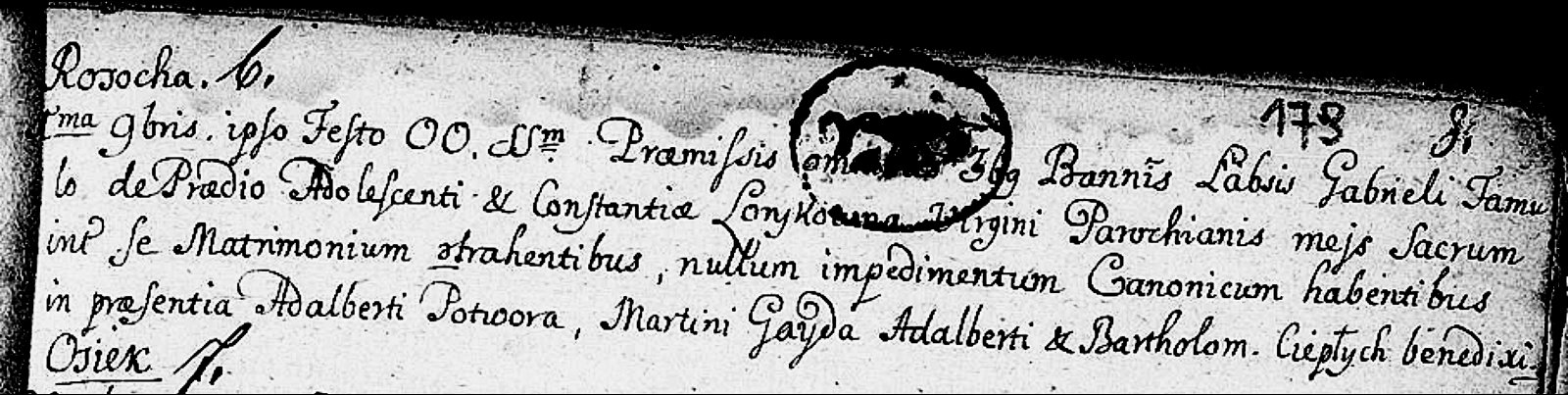
On the 1st of November, itself the Feast Day of All Saints*, after the proclamation of all 3 banns and since no Canonical impediment was standing in the way, I blessed the holy marriage being contracted between themselves** of the industrious Gabriel (Lewandowski), a servant from the estate***, a bachelor, and Konstancja Lorykowna****, a maiden, (both) my parishioners*****, in the presence of the witnesses Wojciech Potwora, Marcin Gayda, Wojciech & Bartłomiej Ciepły.
Notes: *OO.SSm = Omnium Sanctorum/of All Saints
**Sacrum int(er) se Matrimonium.../the holy marriage being contracted between themselves: In Catholic Theology marriage is viewed as a contract between the bride and the groom.
***famulo de Prœdio: a servant on the manorial estate of the noble landowner.
****owna: old feminine suffix used for an unmarried woman .
*****mejs =meis, the Ablative Plural of meus, mea, meum. my. It modifies both the groom and the bride.
|
|
|
|
|
|








 FAQ
FAQ Search
 Memberlist
 Profile
 Log in to check your private messages
 Log in
 Register